


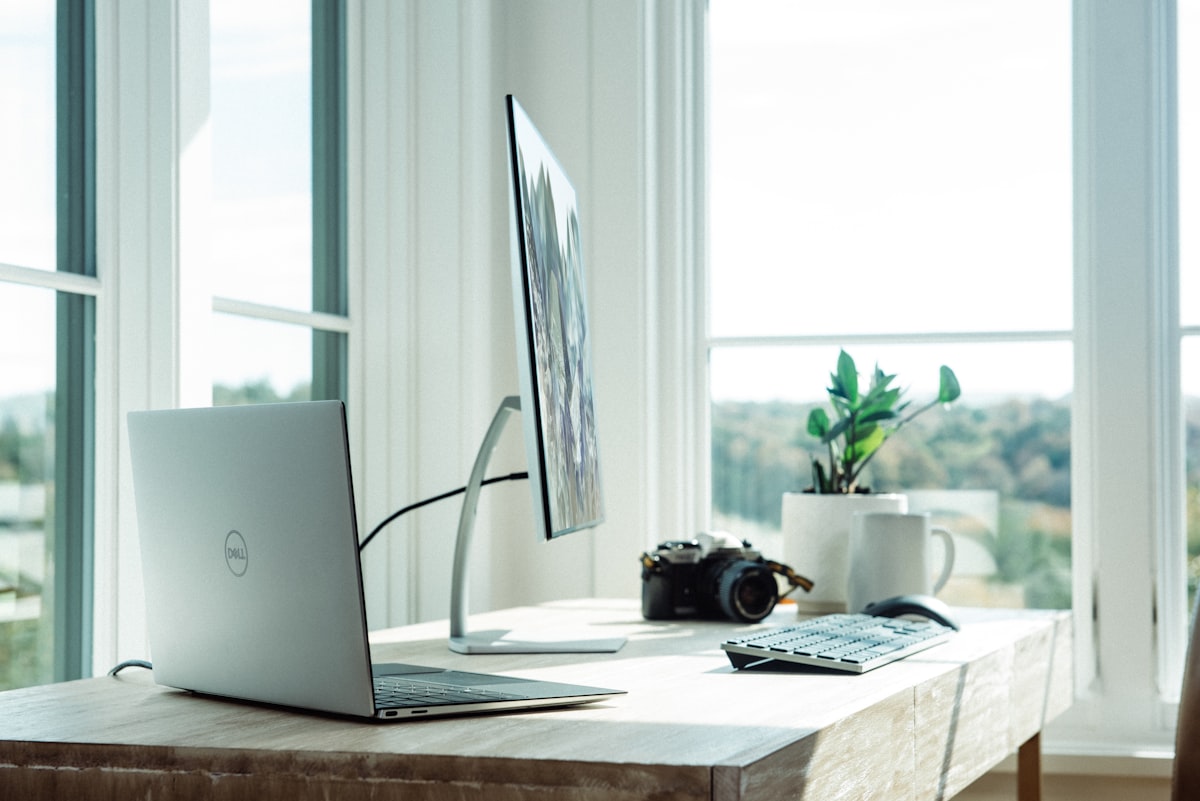
A good home workspace is less about having a dedicated room and more about having a consistent setup that tells your brain it is time to work.
The first priority is light. Natural light is ideal, but if that is not possible, a well-positioned desk lamp that illuminates your work surface without creating glare on your screen will serve you well.
Ergonomics tend to be underestimated until something starts to ache. Your monitor should sit at roughly eye level, and your keyboard should allow your wrists to remain flat. A few small adjustments here prevent a lot of discomfort later.
Equally important is having a clear signal for when the workday ends. Closing a laptop, tidying a surface, or simply leaving the room can help your mind make the transition between work and rest.